Cleaning up after a hurricane or flood in Houston
When Hurricane Beryl came ashore on July 8, 2024, more than two million CenterPoint Energy customers lost power. Storms like that leave a long list. Here is the order to work through it.
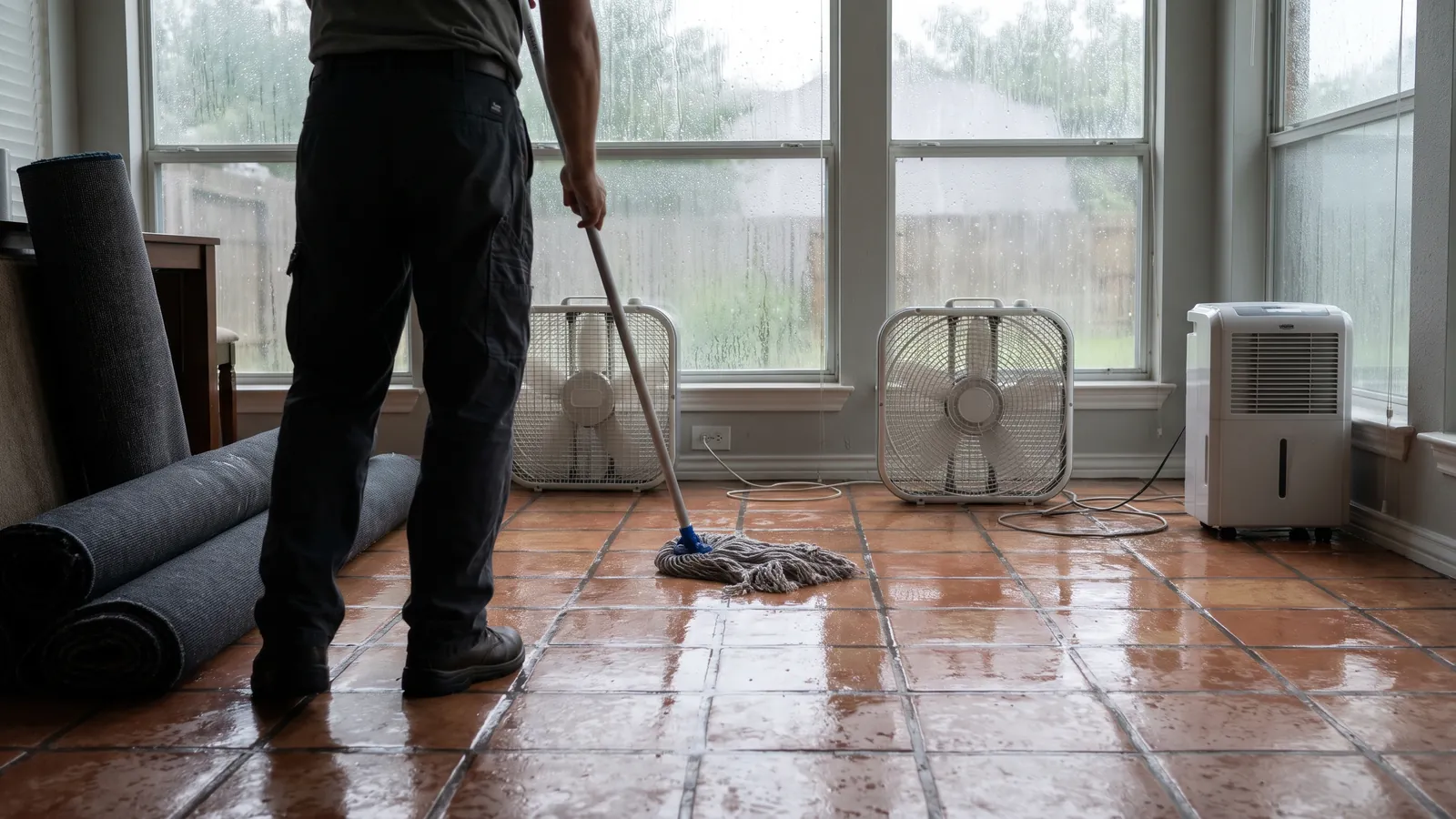
Houston knows storms. Even a fast-moving hurricane can leave homes with fallen trees, water in the house, spoiled food and days without power, and the cleaning that follows has to be done in the right order to be safe and to protect an insurance claim.
1. Safety before cleaning
- Stay out of standing water that may be touching electrical outlets or cords, and never touch downed power lines. Report them to CenterPoint Energy.
- If the house flooded, have the power turned off at the main before you start, and have an electrician check it before it goes back on.
- Never run a generator indoors or in an attached garage.
- Wear gloves, boots and an N95 mask when handling flood debris. Flood water carries sewage and chemicals.
2. Document everything
Before you move anything, take photos and video of every room, the water line on the walls, and damaged belongings. Keep receipts for anything you buy for the cleanup. Call your insurer early; flood damage from rising water is usually covered by flood insurance rather than a standard homeowners policy, so check which you have.
3. Get the water out and the house drying
The first 24 to 48 hours matter most for mold. Standing water should be pumped or extracted, and wet carpet, pad and drywall below the water line usually need to come out. This is the work of a water-damage restoration company with pumps, air movers and dehumidifiers, and it should start before any surface cleaning.
4. Clean and sort
- Throw out: food that touched flood water, and refrigerated food after a long outage; mattresses, pillows and upholstered furniture soaked by flood water; cardboard and paper.
- Clean and disinfect: hard surfaces such as tile, sealed counters, metal and glass, once the house is dry.
- Get advice on: wood furniture, rugs and anything valuable.
5. Watch for mold
Mold can appear within days in Houston's heat. Small areas on hard surfaces can be cleaned. Large areas, mold inside walls, or a musty smell that will not go away need a mold assessment and remediation. In Texas, mold assessment and remediation are licensed trades.
Where a cleaning company fits
Once the water is out and the restoration company has dried the structure, a cleaning crew can clear mud, silt and debris, clean and disinfect hard surfaces, clean out the refrigerator and kitchen, and give the house a full deep clean before you move back in. We provide itemized invoices and dated photos for insurance claims. We do not extract flood water, remove drywall or remediate mold, and we will tell you if we see work that needs a specialist.
If you have storm damage right now, call. We will tell you honestly whether you need us first or a restoration company first.
Quick answers
What should I clean first after a flood?
Nothing until it is safe: power off, water out and the structure drying. Then mud and debris, then hard surfaces, then a full clean before moving back in.
Can I clean mold myself?
Small patches on hard surfaces, yes, with gloves and a mask. Large areas or mold inside walls need a licensed mold remediator in Texas.
Does insurance pay for cleanup?
It depends on your policy and the cause of the damage. Flood from rising water usually needs flood insurance. Keep photos and receipts.
Can a cleaning company remove flood water?
No. Water extraction and drying are restoration work. Cleaning crews come in after the house is dry.