Green cleaning that still gets a Houston bathroom clean
Greener cleaning is less about magic ingredients and more about good tools, fewer fragrances and using strong chemicals only where they are needed.
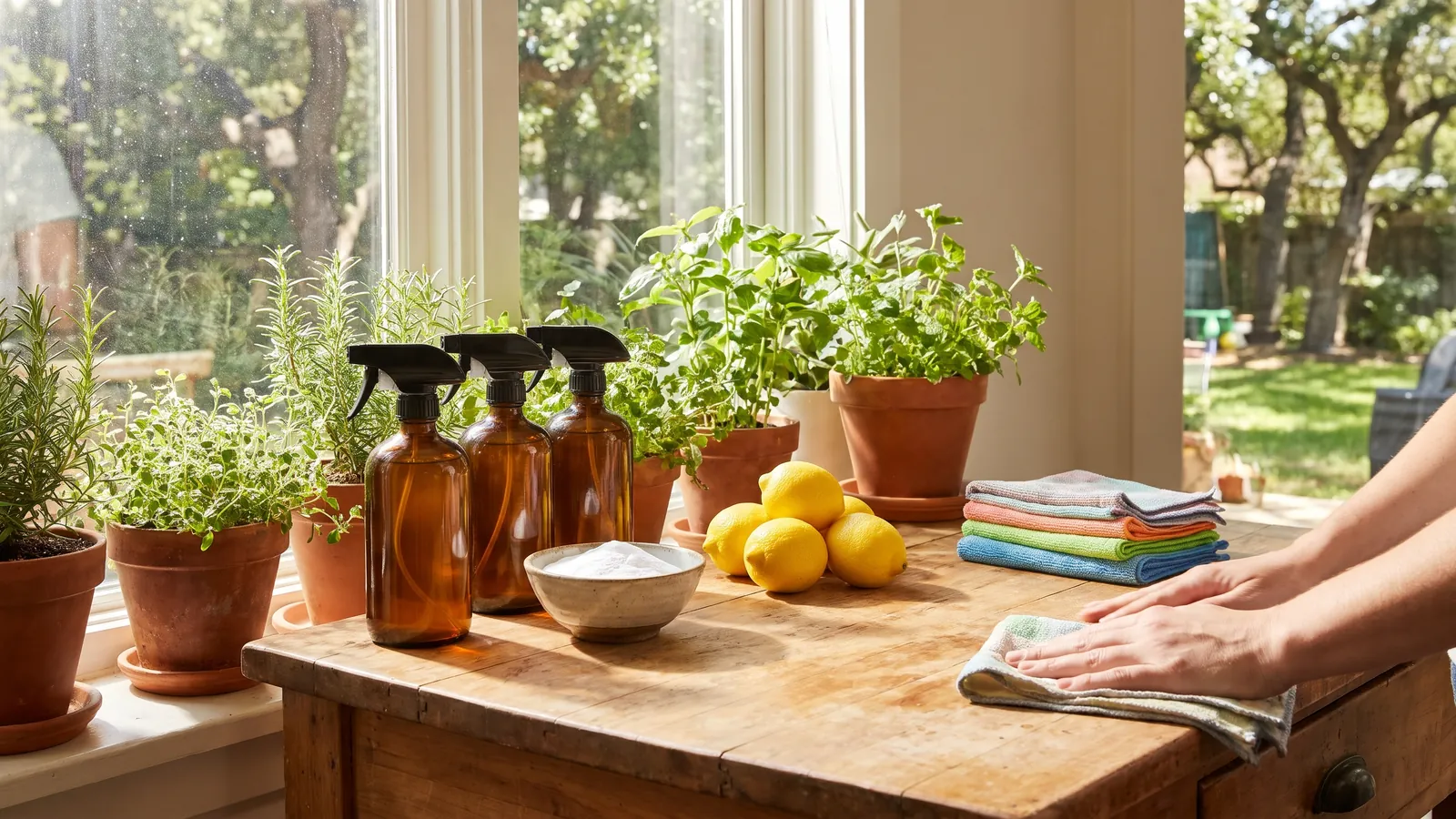
Green cleaning means different things to different people. For some it is avoiding fragrances because of allergies or asthma. For others it is fewer harsh chemicals around children and pets, or less waste. The practical approach covers all three, and most of it is about method rather than product.
What makes the biggest difference
- Microfiber cloths. They lift dust and grime mechanically and need far less product than cotton rags or paper towels. Color-coding (one color for bathrooms, one for kitchens) keeps germs from traveling.
- HEPA vacuums. A sealed HEPA vacuum traps fine dust and pollen instead of blowing it back into the room, which matters in a city with long pollen seasons.
- Fragrance-free products. Fragrance is one of the most common irritants in cleaning products. Fragrance-free does not mean less clean.
- Dilution. Concentrates mixed at the right strength use less packaging and avoid over-applying product.
- Dwell time. Letting a cleaner sit before scrubbing lets a gentler product do the work of a harsher one.
What vinegar and baking soda can and cannot do
White vinegar is good for glass, light hard-water spots and some soap scum. Baking soda is a gentle abrasive for sinks and tubs. But vinegar etches natural stone such as marble, travertine and limestone, should never be mixed with bleach, and is not a registered disinfectant. Neither replaces a disinfectant where one is needed.
When disinfectants still matter
Toilets, bathroom fixtures and high-touch surfaces during cold and flu season, kitchen surfaces after raw meat, and anywhere someone has been sick. A greener approach uses a registered disinfectant there, at the right contact time, and plain cleaning everywhere else, rather than disinfecting the whole house every visit.
Houston-specific notes
Humidity means bathrooms need mildew control, and the gentlest effective option is prevention: a squeegee on shower glass, the exhaust fan running for twenty minutes after a shower, and regular cleaning of grout. Hard water in parts of the region leaves scale that vinegar can lift from glass and fixtures, but not from stone.
Ask for fragrance-free or lower-toxicity products on any visit. If you have products you prefer, leave them out and we will use them.
Quick answers
Is green cleaning as effective?
For everyday cleaning, yes, when the method is right: microfiber, HEPA vacuums and enough dwell time. Disinfecting still needs a registered disinfectant.
Can I use vinegar on granite or marble?
Not on marble, travertine or limestone; it etches them. Sealed granite tolerates it occasionally, but a pH-neutral stone cleaner is safer.
Are fragrance-free products available on every visit?
Yes. Ask and it goes on your checklist.
Is bleach ever necessary?
Rarely in routine cleaning. It is useful for some mildew and disinfection tasks, and must never be mixed with ammonia or vinegar.